
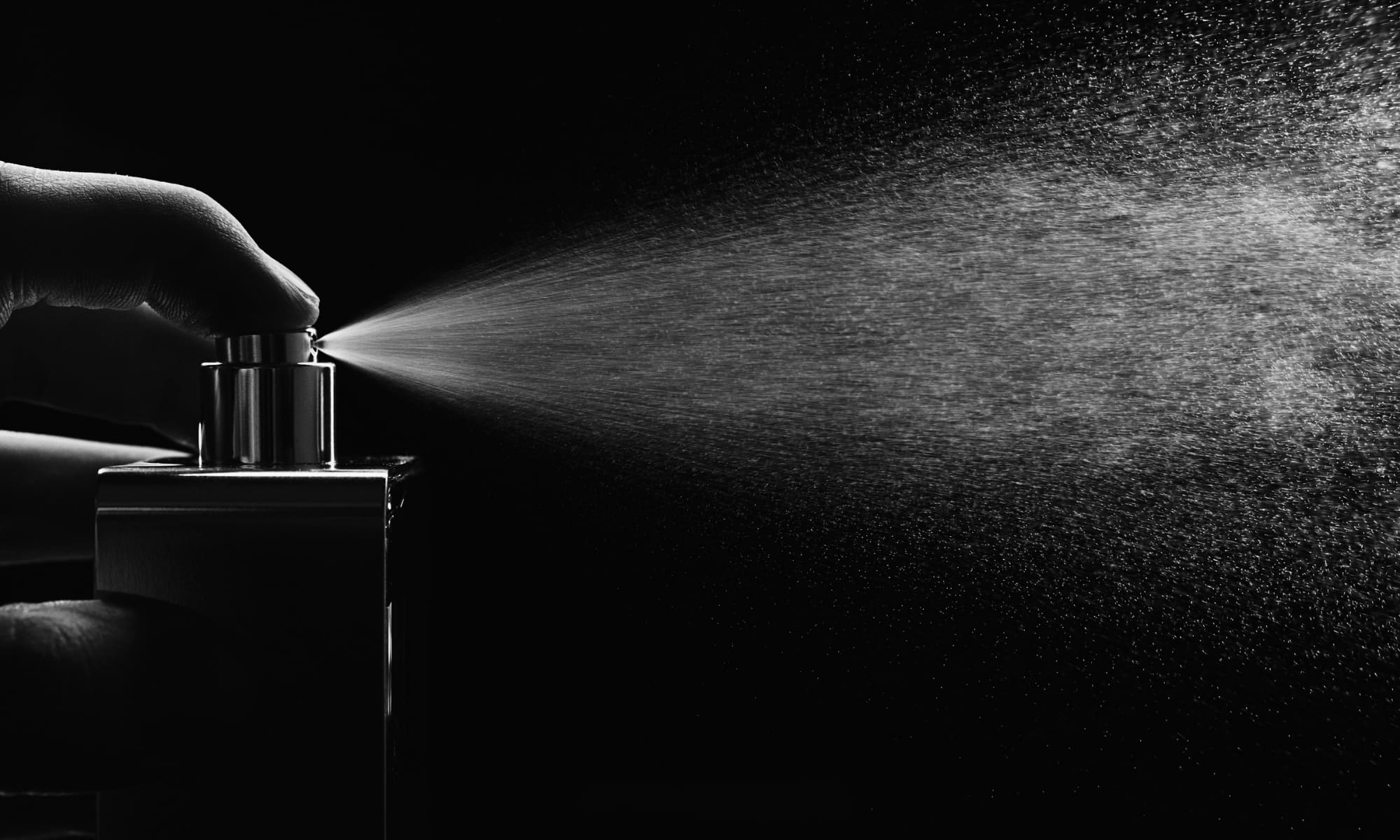
Every bottle of fragrance carries a quiet confession on its label. Eau de toilette. Eau de parfum. Extrait de parfum. Most men read these words as decoration — tiers of a ladder they never climb. But the label is not decoration. It is a measurement of how much of the bottle is actually perfume.
Fragrance is a blend of aromatic compounds suspended in alcohol. The concentration tells you what percentage of that blend is the composition itself — the oils, the resins, the absolutes — and what percentage is simply the carrier. An eau de toilette holds roughly 5–15%. An eau de parfum, 15–20%. An extrait de parfum sits at 20–40% — the highest concentration commercial perfumery allows.
The house builds at 25%. Here is what that decision costs — and what it buys.
01What Concentration Actually Changes
Concentration is not a stronger version of the same scent. It is a different experience of the same architecture.
- Longevity. A dilute composition evaporates in stages and finishes early — three to five hours for most eau de toilettes. At 25%, the base materials sit on skin for eight to twelve hours. Two sprays at seven in the morning are still present at dinner.
- Depth. Dilution flattens a composition. The heart notes arrive quickly and thin out; the base never fully forms. In an extrait, the pyramid holds its shape — top, heart, and base each claim their hours.
- Precision. A concentrated fragrance projects from the skin rather than the air around you. It is noticed when someone comes close, not when you enter a room. Presence, not announcement.
02What It Costs to Build This Way
The arithmetic is simple and merciless. If a 100ml formula at 10% concentration contains 10ml of perfume oil, the same formula at 25% contains two and a half times the raw material — and the raw material is where the money lives. Bulgarian rose absolute. Orris butter. Sandalwood. These are agricultural products with harvests, shortages, and prices that behave like commodities. Building at 25% means the cost of every bottle is dominated by what is inside it, not what is printed on it.
There is a second cost, less visible: maturation. Concentrated compositions must rest before they are bottled — weeks, sometimes months, while the oils marry the alcohol into a single voice. A house that builds at extrait strength is a house that waits.
03How an Extrait Is Worn
Concentration changes the ritual, not just the result. An extrait is applied in two sprays — one at the pulse of the neck, one at the wrist — and left to develop. It does not need reapplication, layering, or reinforcement. If a fragrance requires five sprays to be noticed, it was asking the wrong question.
This is also why the house pairs each Edition Box with fragrance primer sticks: a prepared canvas that extends the composition's arc across the day. The extrait does the speaking. The ritual keeps it speaking.
04The Short Version
Concentration is the difference between a fragrance that visits and a fragrance that stays. Eau de toilette is a morning. Eau de parfum is an afternoon. An extrait is a day — and the memory of it.
When the house names a composition an Extrait de Parfum, it is making a promise about how long you will be remembered in a room after you leave it. We build at 25% because we intend to keep that promise.